

Coastal staging is not about filling a room with seashells—it is about helping buyers feel the light, indoor-outdoor flow, and relaxed polish that make South Florida living distinctive. These five practical moves can sharpen listing photos, make showings feel more intentional, and help a home’s best features stand out from the first scroll.
Start With Light That Feels Effortless
In South Florida, natural light is one of a home’s most valuable visual assets. Before photography or a showing, open blinds, pull back heavy drapery, and clean glass doors and windows so the view and daylight read clearly. The goal is not to make every room look stark; it is to create an atmosphere that feels bright, calm, and easy to move through.
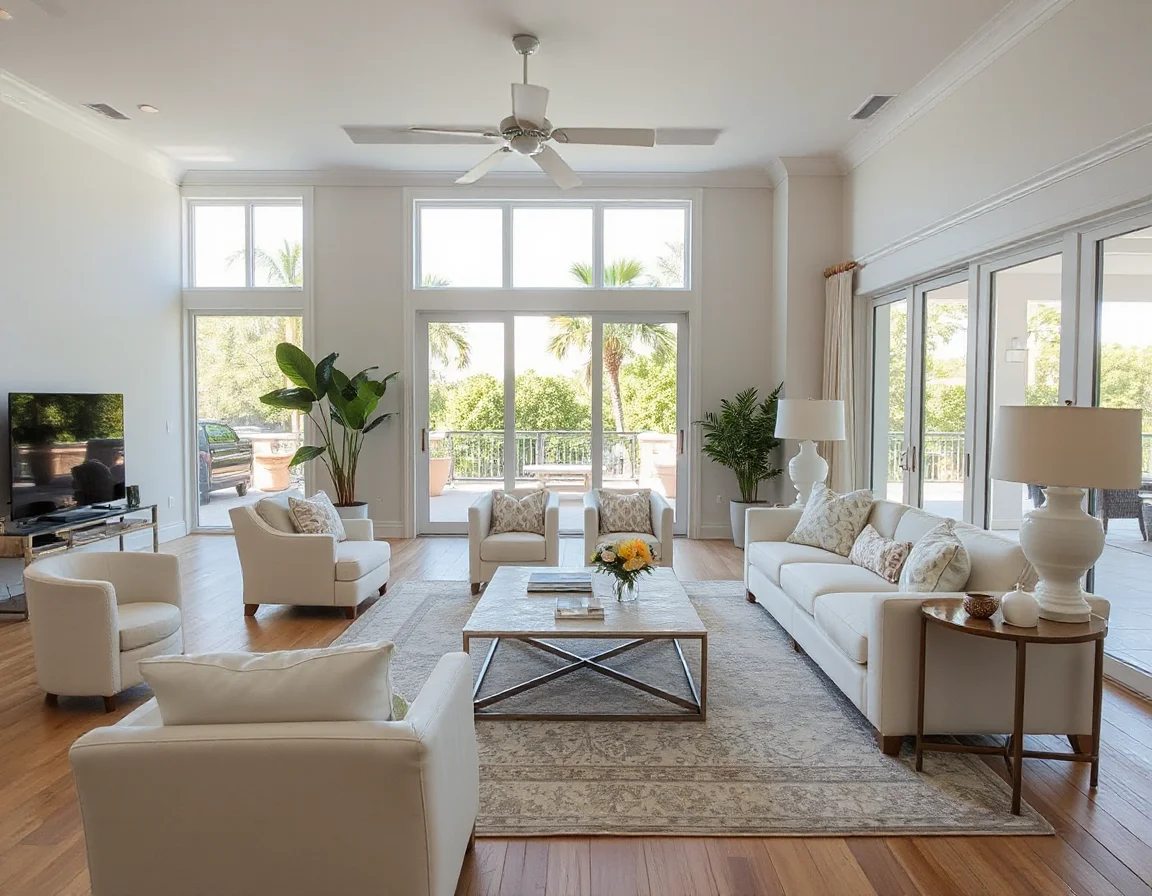
Replace burned-out bulbs and use matching warm-white lighting throughout the home. A mix of bright daylight from windows and harsh, mismatched artificial light can make even well-kept rooms appear uneven in photos. Table lamps, under-cabinet lighting, and a softly lit entry can add depth for late-day appointments without competing with the sun.
Keep window ledges simple. One sculptural vessel, a small plant, or nothing at all often works better than a collection of décor. When there is a balcony, pool view, garden, or water-facing outlook, treat it as part of the room. Arrange furniture so the eye naturally travels toward that feature instead of stopping at the back of a sofa or a crowded console table.
A clean window and an unobstructed glass door can improve the visual impact of a room more than another decorative accessory ever will—especially in listing photography.
Choose a Coastal Palette, Not a Theme
Coastal staging works best when it feels restrained. Think sand, ivory, soft gray, pale blue, sea-glass green, natural wood, woven texture, and crisp white rather than overtly themed décor. The effect should be polished and location-aware, not costume-like. A few thoughtful materials can suggest the setting without distracting buyers from the architecture.
Start by editing surfaces. Kitchen counters, bathroom vanities, coffee tables, and nightstands should feel useful but mostly open. A bowl of citrus, a folded neutral towel, a single tray, or a low ceramic arrangement can provide visual warmth. Remove personal collections, oversized artificial flowers, novelty accents, and anything that makes a space feel more like a storage display than a home.
Textiles are an easy way to refresh a room quickly. Consider light linen-style pillows, a tailored throw, fresh white bedding, and rugs that define seating areas without visually shrinking the floor. If existing furniture is dark or substantial, balance it with lighter accessories and enough open space around it. Buyers should be able to notice ceiling height, flooring, and circulation at a glance.
Make Indoor-Outdoor Living the Main Event
Many South Florida homes have patios, balconies, screened areas, pools, or landscaped yards that extend the usable feel of the property. These spaces should never be an afterthought during preparation. Sweep thoroughly, clear leaves from drains, clean outdoor cushions, and remove mismatched planters or weathered furniture that does not add to the presentation.

Create a clear purpose for each exterior zone. A compact bistro table can define a balcony, while a few coordinated chairs and a small side table can make a covered patio feel inviting. For pool areas, keep towels neatly folded, simplify float storage, and make sure equipment is tucked away where possible. The objective is to show the space’s potential without making it look staged beyond belief.
Landscaping deserves the same attention as interior styling. Trim overgrowth that blocks windows or walkways, refresh mulch where appropriate, and replace containers that look cracked or tired. A home does not need a resort-scale garden to photograph well; it needs clean edges, healthy-looking greenery, and a clear sense that the outdoor areas are cared for.
Outdoor spaces often appear smaller in photos when they are overfurnished. Leave enough open floor area for buyers to read the true scale of a balcony, patio, or pool deck.
Stage the Kitchen and Baths for a Clean Finish
Kitchens and bathrooms can influence a buyer’s impression long before they consider cabinet details or fixture brands. Deep cleaning is the foundation: polish faucets, degrease the range hood, clean grout lines, and remove magnets, paper stacks, appliance cords, and countertop appliances that are not essential for the showing. Fresh hand towels and a subtle, clean scent can complete the reset.
In the kitchen, one intentional focal point is enough. A simple fruit bowl, a wood board, or a small vase can soften the room while keeping counter space visible. If the kitchen has a pass-through, island, or view toward an outdoor area, keep that sightline especially clear. Buyers frequently pause there, and a clean visual path helps the room feel connected to the rest of the home.
Bathrooms benefit from a hotel-inspired edit: matching towels, clear counters, closed toilet lids, and minimal personal products. Remove bath mats that hide flooring unless they are fresh, neutral, and well-sized for the room. A small plant or a textured soap dispenser can add finish without pulling attention away from tile, vanity storage, and natural light.
Give Every Room a Job Before Buyers Arrive
Unclear rooms create questions. A spare bedroom used for boxes, exercise equipment, and a desk may be functional in daily life, but it can make the floor plan harder to understand during a showing. Define the room with one primary use, keep pathways open, and remove enough furniture that buyers can see wall space, windows, closets, and proportions.
This does not require buying an entirely new set of furnishings. Often, it means moving a few pieces to storage, borrowing a neutral chair, or replacing a bulky desk with a streamlined work surface. Entry areas deserve special attention too: a clean threshold, a fresh doormat, and an uncluttered first view set the tone before anyone steps into the main living space.
For occupied homes, a pre-showing routine makes the process easier. Put away pet supplies and personal items, empty small waste bins, turn on key lamps, set the thermostat to a comfortable level, and do one final walk-through from the front door. Look for anything that competes with the home’s strongest features—then simplify it.
Finish With Details That Support the Selling Story
The best staging helps buyers imagine the home itself, not the seller’s belongings. In South Florida, that story often includes bright rooms, an easy connection to outdoor space, durable finishes, and a sense of relaxed refinement. Every adjustment should support those tangible features, from the way a seating area faces the windows to the way towels are folded in a bath.
Before going live, review the property through the lens of the camera and the first showing. Walk slowly, take a few phone photos, and notice crowded corners, dark spots, and views blocked by furniture. Small corrections made in advance can make the listing feel more cohesive across online photos, video, and in-person appointments.
Thoughtful preparation does not conceal a home’s character—it clarifies it. With a bright, edited, and well-maintained presentation, sellers can give buyers a better opportunity to notice the details that make a South Florida property memorable from the start.